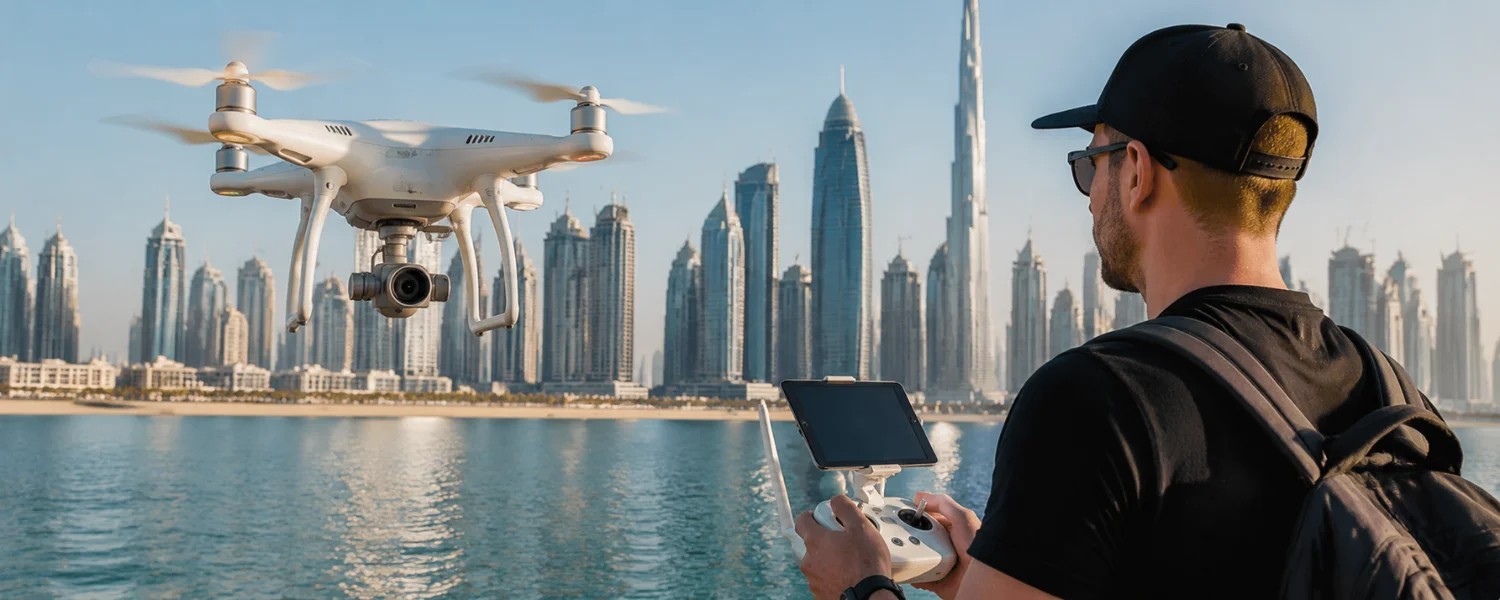
Dubai’s skyline begs to be filmed, but its airspace is not a free‑for‑all. The emirate layers local rules on top of UAE federal regulations, so the smartest pilots plan their flights like professionals—registering properly, checking live no‑fly maps, and securing permits before takeoff. Use this guide as your flight plan to capture breathtaking footage while staying 100% compliant.
Before You Fly: How UAE and Dubai Rules Work Together
Two authorities govern drone operations in Dubai:
- GCAA (UAE General Civil Aviation Authority): Sets nationwide drone laws, registration, and the official fly/no‑fly map via My Drone Hub.
- DCAA (Dubai Civil Aviation Authority): Adds Dubai‑specific requirements, including No‑Objection Certificates (NOCs) for most commercial work and special permissions for filming and events. Filming typically also requires approval from the Dubai Film and TV Commission (DFTC).
Think of it this way: register and comply federally with GCAA, then add any Dubai permits (DCAA/DFTC) your mission requires.
Step‑by‑Step: Fly Legally in Dubai
- Create a My Drone Hub account (GCAA), register yourself and your aircraft, and mark the registration number on your drone.
- Check the live My Drone Hub map for Dubai airspace status, approved recreational zones, and no‑fly areas; plan a compliant route.
- For commercial work (filming, mapping, inspections), apply for a DCAA NOC and, if filming, secure DFTC permits for locations/dates.
- Carry your IDs, registrations, and permits (digital or printed) during all operations.
- Conduct a risk assessment: site survey, separation distances, people on the ground, helipads, and nearby infrastructure.
- Brief your crew/spotter, set geo‑limits in your flight app, and verify return‑to‑home altitude beneath 120 m (400 ft) AGL.
- Fly in daylight, VLOS (visual line of sight), and keep clear of people, vehicles, buildings, and crowds; log each flight.
- Store and share footage responsibly: respect privacy, remove sensitive content, and retain permits with your project records.
21 Do’s and Don’ts for Drones in Dubai
1) Do: Register your drone and yourself (GCAA)
Start by registering on the GCAA’s My Drone Hub and adding your aircraft. This links your identity to your device and proves you operate responsibly.
2) Do: Obtain the right Dubai permits for commercial flights
Commercial operations require a DCAA No‑Objection Certificate (NOC). Filming typically also needs Dubai Film and TV Commission (DFTC) approval. Secure these before you power up.
3) Do: Respect separation distances (the “50‑50” safety mindset)
Maintain generous distance from people, vehicles, buildings, and gatherings; never fly over crowds. Use 50 m as a practical baseline unless a different limit is published in My Drone Hub or your permit, and expand your buffer in busy urban spaces.
4) Do: Study local hazards and restricted zones
Government/military facilities, critical infrastructure, active construction, and sensitive waterfront sites are typically off‑limits. Always verify your route against the live no‑fly map and your permit conditions.
5) Don’t: Fly beyond visual line of sight (VLOS)
Keep your drone in clear, unaided view at all times to react quickly to airspace changes and ground risks. FPV goggles require a competent visual observer.
6) Don’t: Enter restricted or prohibited areas
Respect GCAA/DCAA no‑fly zones, including airport and heliport vicinities, security sites, and other marked areas. If the map or your permit says no, it’s no.
7) Don’t: Fly over residential areas or invade privacy
Dubai protects personal privacy. Avoid flights over homes, private gardens, and residential communities, and never publish identifiable images without consent.
8) Do: Fly within approved aviation clubs and zones
Recreational flights belong in designated flying areas and licensed RC clubs shown in My Drone Hub. These locations are designed for safer hobby flying.
9) Do: Seek official guidance when in doubt
For edge cases—events, proximity to helipads, or complex shoots—contact DCAA or GCAA early. Their guidance prevents costly delays and non‑compliance.
10) Don’t: Fly near airports or heliports
Airport and heliport zones are strictly controlled. Keep well clear and follow all map advisories and NOTAMs; never assume a “quick shot” is allowed.
11) Do: Hire an authorized company for commercial projects
For feature films, TV, real estate, surveying, or construction, work with approved local operators who carry permits, insurance, and experienced crews.
12) Do: Obtain permission before aerial photography
Securing filming/photography permissions protects your team and your footage. Always ensure you have location approvals, DCAA NOC, and DFTC permits where applicable.
13) Do: Honor the 120 m (400 ft) altitude limit
Stay at or below 120 m AGL unless your authorization explicitly allows otherwise. This keeps you out of manned aircraft traffic and within standard limits.
14) Do: Fly only in daylight and good weather
Low sun, haze, and desert winds can degrade visibility and control. Daylight operations with stable conditions are the safest and most compliant choice.
15) Don’t: Drop or carry dangerous payloads
Do not release objects, carry hazardous items, or use add‑ons that could endanger people or property without explicit authorization.
16) Do: Label your drone and carry your documents
Mark the drone with its registration number and keep your ID, GCAA registration, DCAA NOC, and DFTC permits handy—digital copies are fine if clearly readable.
17) Don’t: Fly from moving vehicles or in crowded urban canyons
Launching from vehicles or weaving between buildings amplifies risk and often breaches separation and VLOS rules. Choose open, controlled locations.
18) Do: Manage batteries for Dubai’s heat
High temperatures reduce battery life. Store packs in the shade, pre‑cool before charging, avoid hot‑soak takeoffs, and land with a bigger reserve than usual.
19) Do: Maintain insurance (required commercially)
Commercial policies are typically mandatory and wise for any high‑value flight. Verify coverage meets DCAA requirements for your operation type.
20) Don’t: Ignore crowds, events, or emergency scenes
Never overfly public gatherings, beaches with dense attendance, parades, or incidents involving first responders unless explicitly permitted and coordinated.
21) Do: Keep flight logs and update firmware
Maintain accurate logs, sync your flights, and keep firmware/maps current. Good records simplify approvals and help answer any compliance questions on site.
- Where You Can Fly in Dubai Recreational flying is best done in designated RC clubs and approved zones published in My Drone Hub. These locations provide safer airspace, fewer bystanders, and fewer surprises. Outside those zones, Dubai’s dense urban environment and privacy protections make ad‑hoc flights risky and often non‑compliant without permits.
- Commercial Filming, Mapping, and Inspections: What You Need
- GCAA registration for pilot and aircraft, with visible registration marking.
- DCAA NOC for each operation in Dubai, aligned to location, date/time, and altitude.
- DFTC filming permits for media capture in public or controlled locations.
- Operations manual, risk assessment, crew roles, and emergency plan.
- Insurance meeting DCAA thresholds; additional coverage for sensitive sites.
- Data and privacy compliance: avoid sensitive facilities; obtain releases on private property.
Submit complete applications with maps, schedules, and mitigation steps. Realistic lead times and clear comms with location owners keep productions on track.
- Penalties and Enforcement Dubai enforces drone rules strictly. Flying unregistered, entering no‑fly zones, breaching privacy, or endangering aircraft can lead to equipment seizure, fines, permit revocations, and potential legal action. Keep your documents on hand and be ready to show your permits on site.
- Dubai Conditions: Practical Safety Tips
- Heat and sun: Use ND filters, monitor battery temps, and plan shorter flights midday.
- Wind and gusts: Desert thermals can spike winds quickly; set conservative return‑to‑home.
- Sand and dust: Use takeoff pads, clean motors/gimbals post‑flight, and protect vents.
- GNSS and compass: Urban reflections can spoof position; verify home point and maintain VLOS buffers.
Visitors and Tourists: Can You Fly a Drone in Dubai?
Yes—if you follow the same steps as residents. Register with GCAA, use approved recreational zones, and avoid residential and sensitive sites. For professional shoots, the fastest compliant route is partnering with an authorized UAE operator who can secure DCAA/DFTC approvals and insurance on your behalf.
Quick Pre‑Flight Checklist (Print or Save)
- GCAA pilot and drone registered; number marked on aircraft.
- DCAA NOC and, if filming, DFTC permits approved for date/time/location.
- My Drone Hub map checked; route, altitude, and buffers confirmed.
- Batteries balanced and cool; RTH altitude set under 120 m.
- Spotter briefed; emergency and lost‑link procedures reviewed.
- Privacy plan: no residential flyovers; releases/permissions secured.
- Insurance documents accessible; flight logs ready.