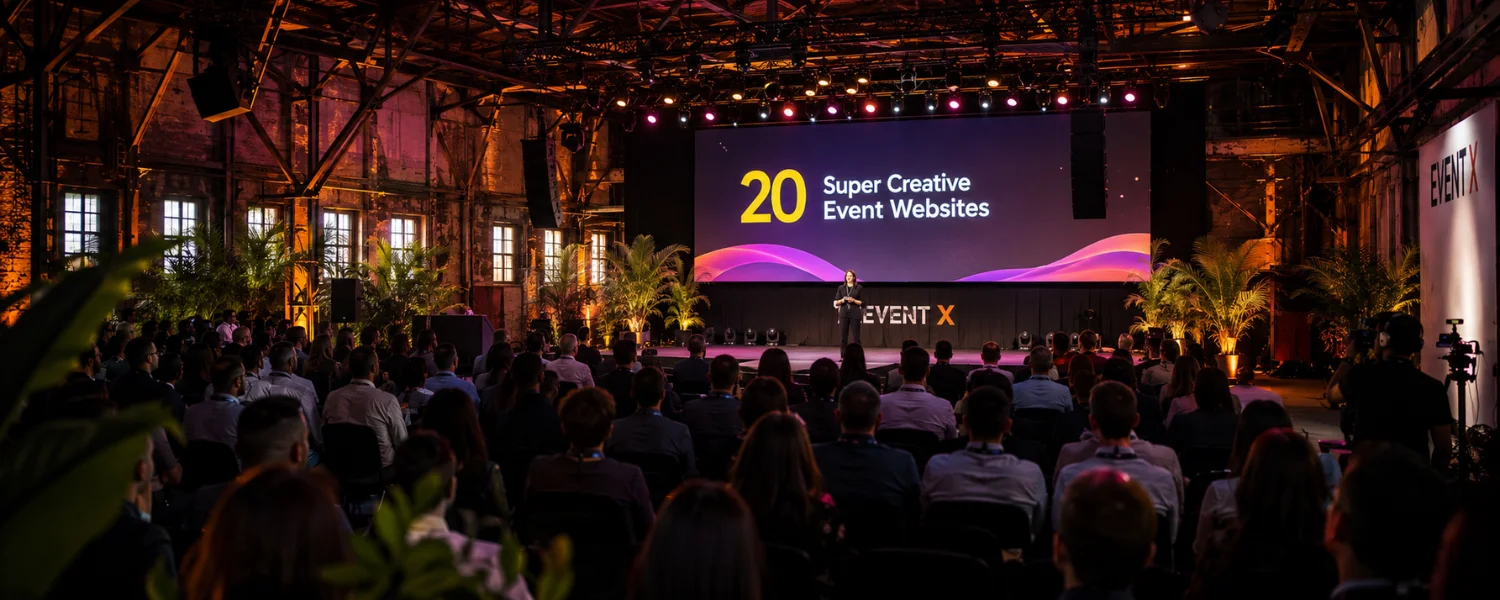
When you’re promoting a festival, wedding, fundraiser, or global conference, your website is the first impression and the last mile to conversion. The best event websites combine stunning visuals with frictionless UX—clear agendas, transparent pricing, fast load times, and persuasive storytelling—to turn curiosity into committed attendees. Below, you’ll find the internet’s most comprehensive roundup of creative event website examples, plus the strategy and checklists to help you build one that performs.
What Makes a High-Converting Event Website
- Clarity first: A crystal-clear value proposition, date, location, and primary call to action above the fold.
- Agenda and speakers that are easy to scan, filter, and save—ideally with a personal schedule builder.
- Seamless registration: Fewer form fields, multiple payment options, trust badges, and transparent pricing.
- Performance and accessibility: Fast, mobile-first pages meeting WCAG 2.2 AA and Core Web Vitals.
- Social proof: Logos, testimonials, press, UGC galleries, and real-time updates to build momentum.
- Wayfinding: Smart navigation, search, breadcrumbs, and persistent CTAs that travel with the user.
- Lifecycle content: Travel and hotel info, code of conduct, safety, FAQs, and post-event replay libraries.
- SEO and data: Event schema, FAQ schema, GA4 tracking, heatmaps, and event-tied email capture.
How to Plan Your Event Site: Goals, Audience, KPIs
- Define success: Registration targets, revenue by ticket tier, sponsorship value, and NPS/CSAT.
- Map your audience: Attendees, sponsors, exhibitors, press—each needs tailored landing paths.
- Own the journey: Awareness (teasers), Consideration (agenda, speakers), Decision (pricing tiers), and Post-purchase (logistics, app, updates).
- Track the right things: Source-to-sale attribution, drop-offs in checkout, schedule-builder engagement, email capture rate, load time impacts.
25 Event Website Examples with Smart Ideas You Can Steal
1) Dreamforce
Dreamforce’s site showcases how a major tech conference can be both bold and effortless to use. Sleek visuals, interactive speaker and session pages, and intuitive registration funnel visitors toward action while preview videos build anticipation.
- Event type: Global tech conference
- Why it works: Polished branding, frictionless navigation, and engaging video previews
- Notable elements: Session finder, networking prompts, and streamlined signup
- Tip: Pair dynamic hero videos with concise headlines and a single primary CTA to focus action.
- Visit: Search “Dreamforce official site”
2) SXSW
SXSW brings tech, film, music, and culture together—and its site mirrors that richness with layered agendas, discovery tools, and deep content libraries. You can explore lineups, screenings, and interactive sessions without feeling lost.
- Event type: Multi-track festival and conference
- Why it works: Powerful discovery across tracks with a unified design language
- Notable elements: Interactive agenda, artist/film databases, cultural showcases
- Tip: Use filters and saved lists to let visitors “build their own festival.”
- Visit: Search “SXSW official site”
3) Paisley and Caitlin’s Wedding Website
This wedding site is personal and practical: warm storytelling, elegant typography, and a guestbook that invites everyone into their journey. Thoughtful details make planning feel intimate, not transactional.
- Event type: Wedding
- Why it works: Human-centered storytelling plus clear logistics
- Notable elements: Blog of shared moments, guestbook, photo memories
- Tip: Add travel tips, dress code photos, and an FAQ to reduce guest questions.
- Visit: Private wedding websites (example reference)
4) Eventbrite
Part marketplace, part inspiration engine, Eventbrite’s site is clean, fast, and focused on discovery. Listings shine, navigation is intuitive, and checkout is built for trust and speed.
- Event type: Event marketplace and ticketing
- Why it works: Minimalist design that foregrounds events
- Notable elements: Category browsing, location-based discovery, secure ticketing
- Tip: Treat your event page like a homepage—headline, proof, logistics, and urgent CTAs.
- Visit: eventbrite.com
5) Creative Retail Awards
A gallery-like site that celebrates inventive retail design. Striking visuals and past-winner showcases inspire entries while keeping registration simple.
- Event type: Industry awards
- Why it works: Visual storytelling with clear paths for entrants and attendees
- Notable elements: Winners gallery, category breakdowns, easy submission flow
- Tip: Use past winners and judge bios as credibility anchors for awards sites.
- Visit: Search “Creative Retail Awards site”
6) INBOUND
Vibrant and high-energy, INBOUND’s design reflects its thought-leadership pedigree. Deep speaker profiles and a modular agenda let attendees plan meaningful days.
- Event type: Marketing and innovation conference
- Why it works: Brand-consistent visuals with conversion-focused UX
- Notable elements: Agenda builder, workshops overview, bold CTAs
- Tip: Use persistent “Get Tickets” buttons on mobile to reduce friction.
- Visit: Search “INBOUND conference site”
7) Mammoth March
A cause-powered march site that centers purpose. Vivid imagery, participant stories, and embedded donation flows turn empathy into action.
- Event type: Charity march
- Why it works: Emotional storytelling + streamlined giving
- Notable elements: Route maps, participant highlights, donation integration
- Tip: Add suggested amounts with impact labels to lift average donation value.
- Visit: Search “Mammoth March event”
8) SF Travel
Part inspiration, part planning companion, SF Travel’s site curates neighborhood guides, cultural hits, and hidden gems, helping visitors craft memorable itineraries.
- Event type: City travel and events hub
- Why it works: Rich editorial with user-generated content for trust
- Notable elements: Guides, itineraries, contributor tips
- Tip: For destination events, build mini city guides for attendees and press.
- Visit: sftravel.com
9) Richmond Sunflower Festival
A sunshine-filled site that makes planning effortless. Bloom calendars, photo galleries, and family-friendly guidance showcase the joy of the day.
- Event type: Seasonal outdoor festival
- Why it works: Clear timing info and visual proof of experience
- Notable elements: Bloom date calendar, galleries, on-site tips
- Tip: Use dynamic alerts for weather and peak times to set expectations.
- Visit: Search “Richmond Sunflower Festival site”
10) Summit
A portal into ideas and meaningful connections. Quotes, speaker spotlights, and a curated agenda help visitors shape a transformative experience.
- Event type: Ideas and leadership gathering
- Why it works: Editorial curation with community-forward design
- Notable elements: Speaker showcases, live social feeds, session curation
- Tip: Surface “can’t-miss” tracks for skimmers who need quick decisions.
- Visit: Search “Summit event series site”
11) The Webby Awards
Greyscale sophistication punctuated with mint accents makes the Webby site both modern and memorable. Interactive pages keep audiences exploring—and entering.
- Event type: Digital awards
- Why it works: Distinctive color system and playful interactivity
- Notable elements: Category navigation, past honorees, entry prompts
- Tip: Use subtle motion to reveal content without harming performance.
- Visit: webbyawards.com
12) Make Me Pulse
Bold imagery and whimsical characters showcase an agency’s creative DNA while keeping the path to case studies and contact crisp and fast.
- Event type: Creative/interactive showcases
- Why it works: Personality-forward visuals with guided messaging
- Notable elements: Large-format imagery, playful mascots, clear CTAs
- Tip: Anchor big visuals with scannable headlines and microcopy.
- Visit: makemepulse.com
13) Epicurrence
Adventure meets design retreat. The site’s photography and attendee stories evoke belonging, while forums extend the experience beyond the event.
- Event type: Design and outdoor retreat
- Why it works: Community storytelling as the hero
- Notable elements: Alumni stories, forum, experience-centric galleries
- Tip: Add alumni spotlights to nurture long-term community value.
- Visit: epicurrence.com
14) Black Arts & Ideas
A vivid fusion of imagery and line drawings creates a unique aesthetic. Colorful art, layered textures, and intuitive flows mirror the event’s creative energy.
- Event type: Cultural and arts program
- Why it works: Art direction with functional structure
- Notable elements: Immersive visuals, intuitive scroll storytelling
- Tip: Pair expressive design with sticky nav and anchor links for usability.
- Visit: Search “Black Arts & Ideas event”
15) Coachella
An electrifying digital canvas. Lineup exploration, on-site guides, and fashion-forward visuals make this a masterclass in culture-rich festival UX.
- Event type: Music and arts festival
- Why it works: High-energy visuals with practical planning content
- Notable elements: Lineup explorer, festival guides, merch integration
- Tip: Offer playlist embeds so visitors preview the vibe—and convert.
- Visit: coachella.com
16) Shiloh Events
Case studies do the selling here. From strategy to execution, Shiloh’s site shows the process—and outcomes—brands care about.
- Event type: Event production agency
- Why it works: Outcome-focused case studies and client testimonials
- Notable elements: Process overview, industry-specific examples
- Tip: Tie visuals to measurable results to win enterprise trust.
- Visit: Search “Shiloh Events site”
17) Motley Crowd
Motion makes the message. Animated graphics, video, and playful mouse effects add delight without losing clarity, creating a memorable digital journey.
- Event type: Creative event platform
- Why it works: Cinematic visuals with interactive micro-moments
- Notable elements: Mouse-effect interactions, video storytelling
- Tip: Cap animation duration and provide prefers-reduced-motion support.
- Visit: Search “Motley Crowd event site”
18) LiveWorx
Tech-forward and people-focused, LiveWorx’s site explores AI, XR, and more through clear tracks and speaker profiles, with virtual options built-in.
- Event type: Emerging tech conference
- Why it works: Clear tracks and a future-facing content structure
- Notable elements: Technology showcases, hybrid participation flows
- Tip: Add “who should attend” by role to increase relevance and conversions.
- Visit: Search “LiveWorx site”
19) Digital Art Fair
A virtual gallery that treats digital work with museum-level respect. Artists and panels are presented with depth and context to elevate discovery.
- Event type: Digital art fair
- Why it works: Immersive galleries with artist backstories
- Notable elements: Virtual rooms, panel archives, collector resources
- Tip: Include “buy” or “enquire” CTAs beside art for clear next steps.
- Visit: Search “Digital Art Fair site”
20) Fathom
Fathom’s site uses multimedia narratives to explore social issues and mobilize action. Stories lead to conversation—and commitments to change.
- Event type: Story-driven social impact platform
- Why it works: Layered storytelling that invites participation
- Notable elements: Video + text features, discussion prompts, action links
- Tip: Close every narrative with a tangible next step—donate, join, share.
- Visit: Search “Fathom storytelling site”
21) Web Summit
One of the world’s biggest tech events, Web Summit’s site balances massive scale with clarity: tracks by theme, speaker density, and strong social proof.
- Event type: Global tech conference
- Why it works: Scale without overwhelm through filters and role pages
- Notable elements: Speaker grids, investor/startup paths, media center
- Tip: Create segmented landing pages for attendees, startups, and press.
- Visit: websummit.com
22) Google I/O
Developer-first UX with clean code samples, session tagging, and replays. The site extends value long after the event through an on-demand library.
- Event type: Developer conference
- Why it works: Content longevity via searchable session archives
- Notable elements: Tags by product/skill, watchlist, replays
- Tip: Treat your site as the permanent home for sessions and docs.
- Visit: Search “Google I/O site”
23) Adobe Summit
Premium polish with enterprise clarity. Personalized tracks by role and industry make a complex event feel custom-fit to each visitor.
- Event type: Digital experience conference
- Why it works: Personalization and crisp enterprise messaging
- Notable elements: Role-based journeys, certification paths
- Tip: Use dynamic content blocks tied to UTM parameters for relevance.
- Visit: Search “Adobe Summit site”
24) TED Conference
Iconic talks, minimal design. TED’s event presence leans on idea density and speaker credibility, with timeless archives that compound SEO.
- Event type: Ideas conference
- Why it works: Simplicity that centers ideas and speakers
- Notable elements: Talk libraries, curation, editorial voice
- Tip: Publish session clips and recaps quickly to capture post-event search.
- Visit: ted.com
25) Glastonbury
A legacy festival with a modern digital heartbeat. The site blends heritage, lineups, site maps, and sustainability guidance with a friendly tone.
- Event type: Music festival
- Why it works: Brand storytelling with practical field guides
- Notable elements: Site maps, accessibility info, sustainability policies
- Tip: Make accessibility and inclusion info first-class content, not footnotes.
- Visit: glastonburyfestivals.co.uk
UX Patterns That Consistently Increase Registrations
- Above-the-fold essentials: Event name, dates, city/time zone, concise value prop, hero media, and one primary CTA.
- Agenda design: Filters by track/role/level, “add to my schedule,” and sharable schedules via email or calendar.
- Pricing clarity: Side-by-side tier cards, what’s included, deadline timers, and refund policies in plain language.
- Checkout fluency: Autofill, wallet payments, promo codes, VAT/GST handling, and localized currency.
- Wayfinding: Sticky nav, breadcrumbs on deep pages, and a persistent “Register” button on mobile.
- Trust and help: Live chat or clear contact routes, help center links, and visible security/payment assurances.
SEO Essentials for Event Websites
- Structured data: Event schema (date, venue, offers), FAQ schema for common questions, and Article/Video schema for recaps.
- Annual strategy: Keep a canonical “/event-name” hub; spin up “/2026” pages yearly; link last year’s recap to the new year; preserve replays for evergreen search.
- On-page fundamentals: Unique titles and meta descriptions, H1 clarity, descriptive alt text, and internal links from high-authority blog posts.
- Core Web Vitals: Optimize images (AVIF/WebP), lazy-load, preconnect to fonts/CDN, and limit heavy scripts on key conversion paths.
- Link building: Speaker announcements, sponsor kits with link guidelines, and press pages with media assets that credit back.
Accessibility and Mobile Readiness
- Meet WCAG 2.2 AA: Color contrast, keyboard navigation, focus indicators, and form labels.
- Motion considerations: Respect prefers-reduced-motion and avoid parallax that impairs readability.
- Captions and transcripts: Required for promo videos, session recordings, and livestreams.
- Touch targets: Minimum 44px tap areas with visible state changes and safe spacing.
Recommended Tech Stack
- CMS: Webflow (visual speed), WordPress + The Events Calendar (flexible), or Squarespace (fast start).
- Ticketing: Eventbrite, Tito, Universe, Cvent, or Bizzabo; test fees, payouts, and refund tools.
- Payments: Stripe/Adyen + Apple Pay/Google Pay; enable installments for premium tickets.
- Email and CRM: Mailchimp, Klaviyo, or HubSpot with pre/post-event automations.
- Analytics: GA4 + server-side tagging, Hotjar/Clarity for behavior, and Matomo for privacy-first setups.
- Accessibility testing: axe DevTools, WAVE, and Screen Reader (NVDA/VoiceOver) passes.
12-Week Launch Timeline (Condensed)
- Weeks 1–2: Goals, personas, IA/wireframes, brand direction, tech selection.
- Weeks 3–5: Design system, content drafting (agenda, speakers, pricing), CMS builds.
- Weeks 6–7: Ticketing integration, SEO elements, performance optimization.
- Weeks 8–9: QA (devices, accessibility), analytics, and conversion testing.
- Weeks 10–11: Content freeze, press kit, sponsor assets, email sequences.
- Week 12: Launch, monitor, A/B test hero CTAs and pricing blocks, fix friction fast.
Copy-Ready Event Website Checklist
- Above the fold: Name, date, location/time zone, one-line value prop, primary CTA.
- Proof: Past attendee logos, testimonials, photos/videos, press mentions.
- Program: Agenda with filters, speakers with creds, “who should attend” by role.
- Pricing: Clear tiers, inclusions, deadlines, refund policy, group/edu discounts.
- Logistics: Venue map, travel/hotels, accessibility, code of conduct, safety plan.
- Registration: Short forms, wallets, taxes, multi-currency, confirmation and calendar files.
- Content: Blog/updates, social embeds, media kit, sponsor prospectus.
- Tech: Event + FAQ schema, GA4 + events, cookie consent, CDN, image compression.
- Post-event: Replay library, slides, highlights, NPS survey, next-year waitlist.