Why this matters now
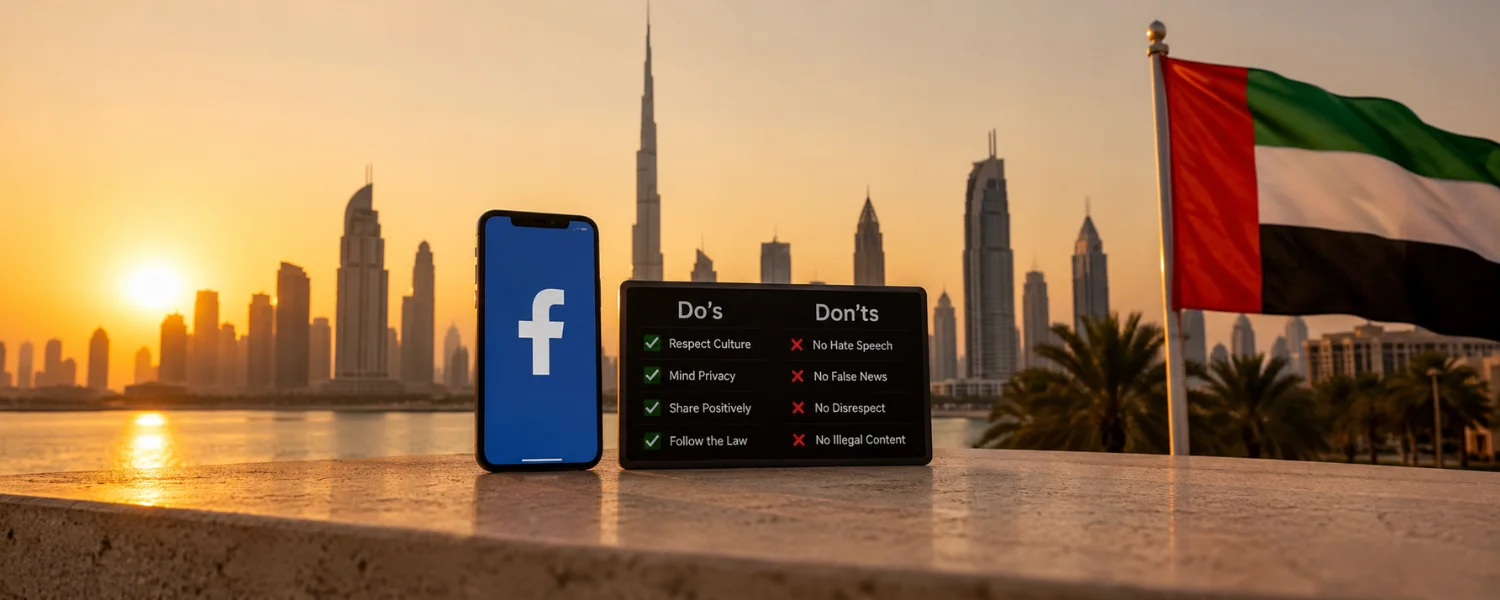
The UAE is one of the most connected countries in the world, and Facebook remains a daily touchpoint for families, teens, and businesses. With that reach comes responsibility: the UAE’s legal framework protects privacy, public morals, and community harmony online just as it does offline. Authorities actively investigate harmful posts, and platforms cooperate with lawful requests. Respecting the rules keeps you safe, protects others, and ensures your Facebook presence reflects well on you and your family.
Quick primer: UAE rules that apply to Facebook
In addition to Facebook’s own Community Standards, several UAE regulations govern what you can publish online, including Federal Decree-Law No. 34 of 2021 on Combatting Rumors and Cybercrimes, defamation and privacy provisions in the Penal Code, and guidance from the Telecommunications and Digital Government Regulatory Authority (TDRA). In practice, this means you can face penalties for posting content that insults religion or the state, invades privacy, spreads false news, promotes vice, threatens or blackmails, or undermines public order. Penalties can include fines, imprisonment, or deportation for non-citizens. When in doubt, choose the respectful, lawful path.
21 Facebook dos and don’ts for the UAE
1) Do respect religion, national symbols, and public morals
Posts that insult or mock religion, national symbols, or public morals can trigger serious legal consequences. Keep discussions civil and focus on ideas, not attacks. Cultural respect online is as important as it is offline.
- Why it matters: Protects community harmony and avoids charges related to religious contempt or public morality.
- UAE rule to know: Content against public morality, Islamic principles, or the social and moral well-being of the UAE is prohibited.
- Facebook policy cue: Hate speech and attacks on protected characteristics are not allowed.
- What to do: Use respectful language, avoid mockery, and skip edgy memes that could be misunderstood.
Tip: If you wouldn’t say it in a public forum or workplace in the UAE, don’t post it on Facebook.
2) Don’t post hate speech or incite violence
Hate speech and calls to violence are banned by law and platform rules. Even sharing someone else’s violent content or inflammatory rhetoric can be risky.
- Why it matters: Prevents real-world harm and legal exposure.
- UAE rule to know: Incitement and promotion of violence, terrorism, or sectarianism are criminal offenses.
- Facebook policy cue: Glorification of violence and hate ideologies is removed.
- What to do: Share balanced, verified information; avoid violent or graphic posts.
Tip: Context is often lost online—if a post needs a long disclaimer, don’t share it.
3) Don’t use profanity, obscene gestures, or explicit content
Swearing and obscene content (including suggestive emojis) can be treated as public indecency online. This includes public comments, DMs that are reported, and group posts.
- Why it matters: Obscenity laws apply online and can lead to fines.
- UAE rule to know: Obscene and malicious content is prohibited and punishable.
- Facebook policy cue: Adult sexual content and explicit imagery are restricted or removed.
- What to do: Keep language clean; avoid sexualized content; use neutral emojis.
Tip: What feels “normal” elsewhere may not be acceptable in the UAE—err on the side of modesty.
4) Do get consent before posting or tagging people (especially children)
Using someone’s photo or video without permission can lead to privacy or defamation complaints. Always ask before posting or tagging, and be extra protective of children’s identities.
- Why it matters: Respects privacy and prevents reputational harm.
- UAE rule to know: Publishing images of others without consent can breach privacy and invite legal claims.
- Facebook policy cue: You can control tag approvals in settings; non-consensual imagery is restricted.
- What to do: Request consent, use tag review, blur faces of minors, and avoid school uniform + location combos.
Tip: Schools and nurseries often prohibit sharing class photos—follow those policies strictly.
5) Don’t share images of accidents, investigations, or victims
Posting crash scenes, injured people, or ongoing police activity is distressing for families and may violate the law.
- Why it matters: Protects dignity, privacy, and active investigations.
- UAE rule to know: Publishing photos or details from accidents or court cases without authorization can be an offense.
- Facebook policy cue: Graphic violence and exploitation are removed.
- What to do: Offer support resources, not images; never identify victims.
Tip: If you filmed an incident, share with authorities only—do not post.
6) Don’t post IDs, addresses, or financial data
Never share Emirates ID, passports, visas, bank statements, vehicle plates with owner data, or private addresses. Identity theft and doxxing are real risks.
- Why it matters: Prevents fraud and protects privacy.
- UAE rule to know: Posting others’ personal or financial information without consent can be a crime.
- Facebook policy cue: Sharing personal data can lead to removal.
- What to do: Redact sensitive details, store documents offline, and use private channels when necessary.
Tip: When selling items, use Facebook’s masking tools; never post your phone number publicly.
7) Don’t bully, defame, threaten, or blackmail
Cyberbullying, intimidation, and reputational attacks are prosecutable in the UAE. This includes “exposing” posts, gossip, and threatening DMs.
- Why it matters: Protects dignity and legal safety for all.
- UAE rule to know: Harassment and blackmail are criminal; defamation can result in fines or jail.
- Facebook policy cue: Bullying, privacy violations, and threats are removed.
- What to do: Keep disputes offline; use report and block tools; document abuse for authorities.
Tip: Apologies and deletions don’t always erase liability—choose calm, factual language or disengage.
8) Do verify news; don’t spread rumors or false information
Forwarding unverified claims—especially about public health, security, or officials—can be treated as spreading rumors.
- Why it matters: Prevents panic and legal exposure.
- UAE rule to know: Publishing or re-sharing false news is punishable.
- Facebook policy cue: False information can be downranked or labeled.
- What to do: Check official UAE sources; if unsure, don’t post.
Tip: Screenshots are easy to fake—trust official domains and verified pages only.
9) Don’t fundraise or sell restricted items without permits
Charity drives, raffles, medical crowdfunding, and selling regulated goods (e.g., medicines, tobacco, some supplements) require approvals.
- Why it matters: Protects public and ensures lawful commerce.
- UAE rule to know: Unauthorized fundraising and unlicensed sales are prohibited.
- Facebook policy cue: Commerce policies restrict regulated items.
- What to do: Use registered charities and obtain permits for sales or promotions.
Tip: If your post involves money or prizes, assume you need a permit—check before posting.
10) Do respect photography restrictions and sensitive locations
Filming or photographing government buildings, restricted areas, or others in private spaces can violate the law.
- Why it matters: Safeguards security and privacy.
- UAE rule to know: Unauthorized photography of sensitive sites and people is restricted.
- Facebook policy cue: Non-consensual imagery can be removed.
- What to do: When in doubt, don’t post; blur or crop identifying details.
Tip: Beach and pool photos: be mindful of bystanders who may not wish to be photographed.
11) Don’t run contests or promotions without approvals
Giveaways, raffles, and “tag to win” promotions often require permits and clear terms. Spammy tagging is discouraged.
- Why it matters: Ensures transparency and avoids fines.
- UAE rule to know: Promotions and commercial communications are regulated; avoid spam.
- Facebook policy cue: Promotions must follow local laws; no forced tagging on personal timelines.
- What to do: Obtain permits and state rules, eligibility, and prize details.
Tip: Use business tools and approved third-party apps, and keep a record of winners.
12) Don’t impersonate or create fake pages
Impersonating individuals, brands, or officials can be criminal and violates Facebook’s identity policy.
- Why it matters: Protects trust and avoids fraud allegations.
- UAE rule to know: Fraud, identity deception, and misuse of official logos can be offenses.
- Facebook policy cue: Real-name policy; verified pages for public figures.
- What to do: Use your real identity; parody must be clearly labeled and non-deceptive.
Tip: Reserve your brand name early to prevent impersonation, and set up two-factor authentication.
13) Do respect copyrights and licenses
Posting copyrighted photos, music, or articles without permission exposes you to takedowns and legal claims.
- Why it matters: Supports creators and protects your account.
- UAE rule to know: Repeated IP violations can lead to legal consequences.
- Facebook policy cue: Rights Manager enforces takedowns and repeat-offender penalties.
- What to do: Use your own content, licensed assets, or public domain material.
Tip: “Credit to owner” does not equal permission—get written consent.
14) Don’t share malware, phishing links, or hacked material
Malicious links, fake giveaways, and “too good to be true” offers harm others and can get you suspended—or worse.
- Why it matters: Keeps the community safe.
- UAE rule to know: Distributing malware or hacking tools is criminal.
- Facebook policy cue: Spam and malicious content are removed.
- What to do: Verify links, enable security alerts, and never share leaked data.
Tip: If a friend “suddenly” messages about urgent money or crypto, assume their account is compromised.
15) Do use VPNs lawfully—and avoid geo-block workarounds for illegal ends
Using a VPN is not automatically illegal in the UAE, but using it to commit or conceal a crime is.
- Why it matters: Intent and misuse determine risk.
- UAE rule to know: Circumventing restrictions to carry out an offense can increase penalties.
- Facebook policy cue: Account security is encouraged; unlawful activity is not.
- What to do: Use secure networks for privacy; never use tech to break the law.
Tip: If a service is blocked, assume there’s a legal reason—don’t bypass it.
16) Don’t post confidential work information
Leaking internal memos, client details, or staff data can breach contracts and laws.
- Why it matters: Protects careers and businesses.
- UAE rule to know: Sharing others’ data or trade secrets can be prosecutable.
- Facebook policy cue: Privacy and IP rules apply.
- What to do: Follow your employer’s social media policy; seek comms approval before posting.
Tip: A quick “can I share this?” with HR or PR saves a lot of trouble.
17) Do manage location sharing and geotags
Automatic location tagging can expose your home, school, or child’s routine. Oversharing travel plans also increases security risks.
- Why it matters: Family safety and privacy.
- UAE rule to know: No specific ban on geotags, but privacy and safety obligations still apply.
- Facebook policy cue: You control location permissions.
- What to do: Turn off location for the Facebook app; post travel updates after you return.
Tip: Avoid posting children in identifiable uniforms with school names or routes.
18) Do follow age limits and set family rules
Facebook’s minimum age is 13. Parents should supervise teens’ accounts and discuss what’s appropriate to post and share.
- Why it matters: Safety, maturity, and legal compliance.
- UAE rule to know: Parents can be held responsible for minors’ harmful conduct online.
- Facebook policy cue: Under-13 accounts are not allowed.
- What to do: Use privacy controls, friend lists, and time limits; keep lines of communication open.
Tip: Create a simple family social media agreement and review it every school term.
19) Do secure the right licenses for ads and influencing
Influencers and media businesses may require UAE e-media licensing and must disclose paid partnerships.
- Why it matters: Transparency builds trust and avoids penalties.
- UAE rule to know: Online commercial activities and paid advertising are regulated.
- Facebook policy cue: Branded content must be disclosed via platform tools.
- What to do: Obtain relevant licenses and use “Paid Partnership” tags.
Tip: Keep contracts and invoices; regulators may request proof of compliance.
20) Don’t organize unlawful gatherings or promote prohibited activities
Coordinating unauthorized demonstrations or promoting illegal services can trigger legal action.
- Why it matters: Protects public order and your legal standing.
- UAE rule to know: Calls for unauthorized public actions and vice activities are prohibited.
- Facebook policy cue: Coordinating harm or illegal activity is not allowed.
- What to do: Use formal channels for community initiatives; obtain permits where required.
Tip: Community support is welcome when it follows the proper approvals.
21) Do pause before you post—and report harmful content
Most trouble is avoidable with a short “pause.” If you see illegal or dangerous content, report it to Facebook and, where appropriate, UAE authorities.
- Why it matters: A 10-second check can save months of stress.
- UAE rule to know: Everyone is accountable for online actions; ignorance is not a defense.
- Facebook policy cue: Easy reporting tools on every post and message.
- What to do: Save evidence, report in-app, and use official UAE reporting portals for cybercrime.
Tip: Teach teens the “grandparent test”: if you wouldn’t be proud to show it to a grandparent or teacher, don’t post it.
Set up Facebook safely: a 5-minute checklist
- Privacy Checkup: Set default audience to Friends, limit past posts, and lock down profile details.
- Tag Review: Enable “Review tags people add to your posts” and “Review posts you’re tagged in.”
- Face Recognition: Turn off face recognition in settings.
- Security: Enable two-factor authentication, alerts for unrecognized logins, and use strong, unique passwords.
- Apps & Websites: Remove old app connections; review permissions for camera, microphone, photos, and location.
- Ad Preferences: Limit sensitive interest categories and hide your activity outside Facebook where possible.
If something goes wrong: report and get help
- Preserve evidence: Take dated screenshots and screen recordings; note URLs and usernames.
- Report on Facebook: Use the “Report” option on posts, profiles, messages, or groups; then block the offender.
- Alert authorities when needed: For threats, blackmail, impersonation, sextortion, or privacy breaches, contact official UAE cybercrime channels.
- Inform your school or employer if it involves students or work; share only necessary details.
- Get support: Speak to trusted adults, school counselors, or professional support services.
For parents and teens: practical family safeguards
- Minimum age 13: Create accounts together, using a family email for recovery.
- Friend lists: Encourage adding only people you know in real life; review friend lists quarterly.
- Posting rules: No location tags at home/school; no uniforms, schedules, or travel plans in real time.
- Boundaries: No DMs with unknown adults; screenshot and tell a parent if someone makes you uncomfortable.
- Weekly check-in: Five-minute family review of privacy settings and recent friend requests.
For businesses and creators: quick compliance notes
- Licensing and disclosures: Obtain appropriate UAE e-media licenses; disclose paid partnerships via Facebook’s branded content tools.
- Promotions: Secure permits for raffles/giveaways; publish clear T&Cs and eligibility; avoid spam tagging.
- Customer data: Get explicit consent for data collection; post a privacy policy if you gather personal information.
- Moderation: Remove defamatory, hateful, or obscene comments on your page; you can be held responsible for hosted content.
- Crisis plan: Pre-draft responses for common issues; escalate legal complaints through your compliance lead.
Edited summary of the UAE TDRA Facebook White Paper: core rules
UAE social media use has surged since early Arab Social Media reports, with Facebook among the most used platforms in Dubai and Abu Dhabi. To encourage safe, responsible use and curb abuse, the government monitors platforms within the law, and the Telecommunications and Digital Government Regulatory Authority (TDRA) issued practical guidance for Facebook users. Here is an edited, modernized summary of those core points:
- Violence: Do not post hate speech, incitement, or graphic violence; the UAE prohibits obscene and malicious content.
- Mature content: Do not run or share alcohol, dating, or other adult content without appropriate age restrictions; follow platform and local rules for contests, promotions, and avoid spam.
- Social and religious ethics: Respect UAE laws that protect public morality, Islamic principles, and the nation’s traditions; do not mock the UAE or its customs.
- Harassment: Do not bully, threaten, or harass; cyberbullying and reputational harm are punishable offenses.
- Sensitive information: Never post others’ IDs or financial data; if you collect information, be transparent and publish a privacy policy.
- Tagging: Get consent before tagging; using images or videos of others without permission can breach privacy and lead to defamation claims.
- Viruses: Do not upload malware or malicious code that could harm Facebook or users.
- Responsibility: You are accountable for what you post; obtain permissions for copyrighted or private content. Repeated IP violations can lead to account deactivation and legal action.
Following these principles helps maintain a positive online environment while honoring UAE laws and cultural norms. Everyone is accountable for their actions online; ignorance of the law is not an excuse.