
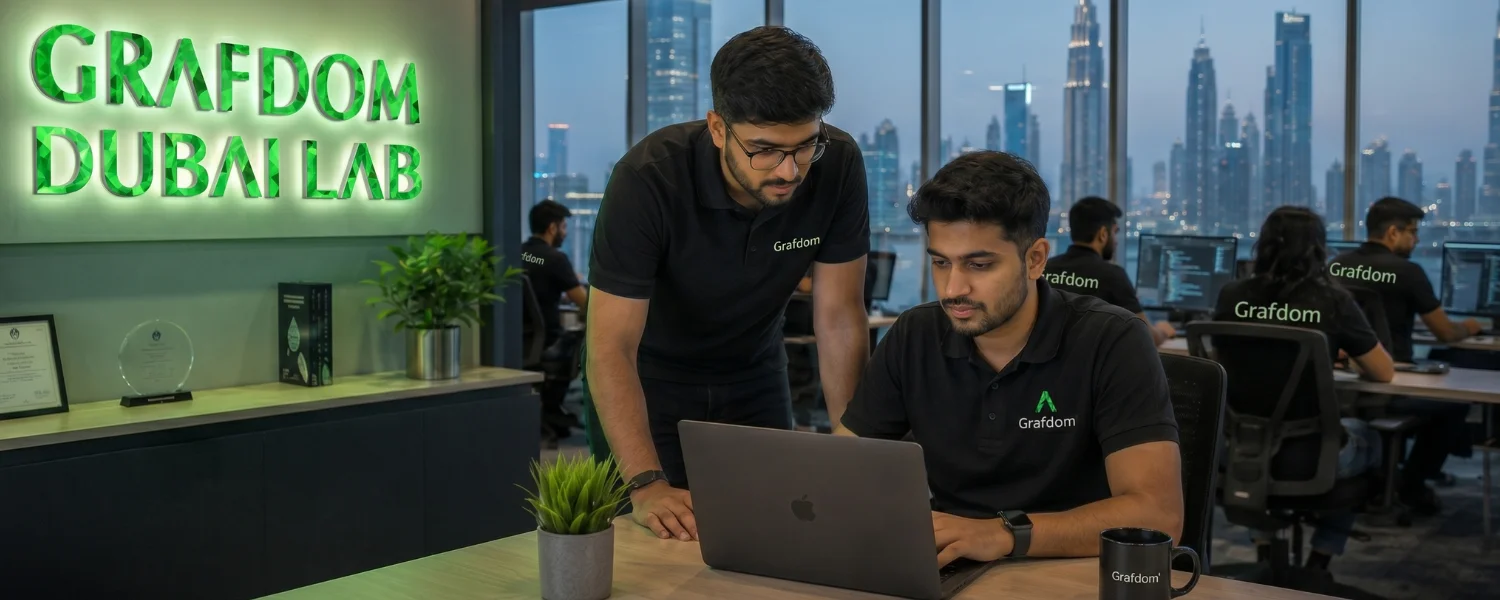
When a technology company invests in local research and development, it doesn’t just build software; it builds momentum—opening doors for graduates, creating pathways for collaboration, and delivering faster, smarter digital experiences for families and businesses alike. Grafdom’s decision to establish a Dubai R&D Lab signals that kind of momentum, aligning regional talent with global innovation in Web 2.0 tools and mobile-first solutions.
Why This Move Matters
R&D bridges the gap between promising ideas and the reliable, secure products you use every day. By anchoring its research work in Dubai, Grafdom is tapping a diverse engineering community and a strategic hub that connects Asia, the Middle East, Africa, and Europe. For clients, that means solutions shaped by on-the-ground insight and faster iteration cycles. For students and families, it means more internships, mentorship, and pathways into high-impact technology careers without leaving the region.
What the Dubai R&D Lab Will Focus On
Advanced Technologies and Web 2.0 Tools
The lab will accelerate development of Web 2.0 applications—platforms that are interactive, social, and user-driven. Expect emphasis on usability, scalability, and seamless integration with popular consumer and enterprise ecosystems.
- Interactive platforms and social features that put users at the center.
- Data-driven capabilities that personalize experiences responsibly.
- Security-by-design to protect users and organizations at scale.
Mobile-First Innovation
With the region’s high smartphone adoption, mobile is the default starting point. The lab will explore new frameworks and performance techniques to make apps faster, lighter, and more accessible across devices.
- Progressive mobile features that work reliably on variable networks.
- Cross-platform development approaches for faster time-to-market.
- Stronger web–mobile convergence for consistent user journeys.
Optimization, Analytics, and User Experience
Optimization and statistics are core to building products that feel intuitive and deliver measurable results. The lab’s focus areas include:
- Performance tuning for low-latency, high-reliability applications.
- Evidence-based UX improvements informed by analytics and testing.
- Automation that streamlines deployment, monitoring, and updates.
Collaboration with Universities and the Tech Community
Grafdom will partner with computer scientists, engineers, and educational institutions to co-develop knowledge and accelerate the training-to-industry pathway. These collaborations can include:
- Joint research projects in areas like human–computer interaction, data analysis, and systems optimization.
- Student internships, capstones, and mentorship that build real-world competencies.
- Faculty-industry exchanges that bring current practice into the classroom and cutting-edge research into product roadmaps.
Hiring: Roles and Skills in Demand
Recruitment has begun for specialists who can translate research into robust, user-centric solutions. Grafdom highlights the following expertise:
- Computer science and software engineering
- Web 2.0 design and front-end engineering
- Optimization and performance engineering
- Applied statistics and data analysis
- Mobile programming across major platforms
For candidates, a strong portfolio of shipped projects, fluency in modern frameworks, and a habit of evidence-based iteration will stand out. Collaboration skills matter: R&D demands teams that can move from whiteboard to prototype to measurable impact quickly and thoughtfully.
What This Means for Clients and End Users
- Faster prototyping and pilots, so ideas are validated with users sooner.
- Localized solutions tuned to regional languages, regulations, and cultural context.
- Security and reliability improvements built into early design decisions.
- Better performance on mobile devices, even with network variability.
- Closer alignment between business goals and product outcomes.
Why Dubai Is the Right Home for R&D
Dubai’s technology ecosystem blends a deep talent pool with a globally connected business environment. Its proximity to fast-growing markets, supportive innovation culture, and established tech clusters make it a natural base for research teams that must move quickly and collaborate broadly.
Official Company Announcement
Dubai, UAE, January 5, 2009 — Grafdom, a leading software development and outsourcing provider, announced the establishment of a research and development lab in Dubai to advance emerging technologies and Web 2.0 applications. The lab will focus on new technologies, online Web 2.0 tools, and mobile applications designed to meet clients’ evolving needs and strengthen their competitive advantage. In addition, Grafdom will collaborate with computer scientists, engineers, and educational institutions on joint research and academic projects.
“A globally positioned R&D network will enable Grafdom to access diverse talent and collaborate to develop revolutionary technologies for its customers. The Middle East’s high growth, emerging economic opportunities, and depth of technology talent make it an ideal location to expand,” said Farid Gasim, Director of Operations.
The lab is expected to lead research efforts that drive greater technological and mobile integration over the next few years. Recruitment has commenced for specialists in computer science, Web 2.0 design, optimization, statistics, and mobile programming. “It’s important for Grafdom to be part of the UAE’s growing economy and contribute its technological expertise to the development of cutting-edge applications and user‑empowering solutions,” he added.
How Success Will Be Measured
- Prototype-to-production velocity and the quality of shipped features.
- Meaningful improvements in performance, reliability, and user satisfaction.
- Effective knowledge transfer with academic partners and early-career talent.
- Client outcomes such as higher adoption, retention, and ROI.
Opportunities for Students, Graduates, and Families
R&D centers thrive on curiosity and continuous learning. If your child or a recent graduate is exploring a STEM path, this is an ideal moment to build market-ready skills:
- Develop a project portfolio that highlights end-to-end problem solving.
- Engage in open-source or community tech initiatives to gain real feedback.
- Strengthen fundamentals in data structures, algorithms, and UX principles.
- Practice evidence-based design: formulate a hypothesis, test with users, iterate.
As Dubai’s technology ecosystem expands, pathways into impactful roles—from research to product engineering—are becoming more accessible. Staying close to industry projects, even during study, can dramatically accelerate readiness for roles like those Grafdom is recruiting today.